


Have you ever wanted to reupholster a chair?
Let’s reupholster a french chair and ottoman! I recently shared the steps of how I deconstructed, stripped and stained an old french chair and matching ottoman and today I’m going to walk you through each step I took to reupholster this beautiful, old french chair.

Step 1…Gather Inspiration
I love getting furniture inspiration on Pinterest. I’m always looking for beautiful pictures online of handmade or english inspired furniture and then I’ll create mood boards on Canva to help me narrow down what pieces of furniture I’m looking for when I’m strolling an antique store or market.
I’ve had a list of specific furniture pieces for years and keep chipping away at the items.
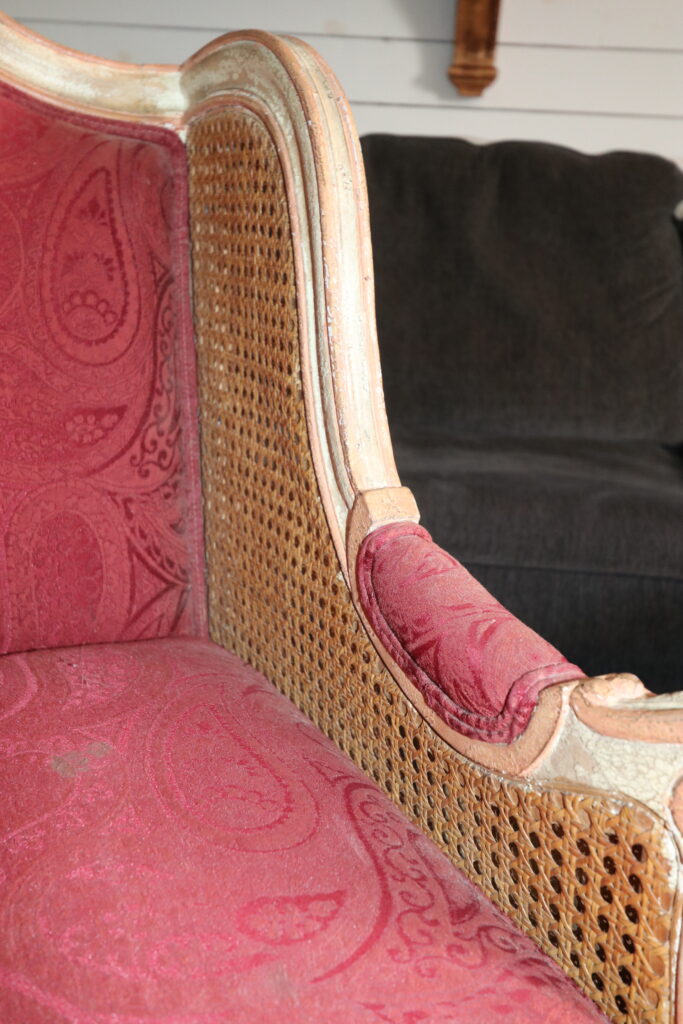

I love finding a quality chair, side table or piece of furniture that is worth refinishing or restoring. If I find something that looks close to my inspo pic…I’ll bring it home with me and that’s exactly how this project came about.
I had a picture on a mood board that was almost identical in shape and size of this chair. The only differences were the fabric and color of the wood. Both of those things are fixable and with a little time and effort, I knew I could transform it into something beautiful.
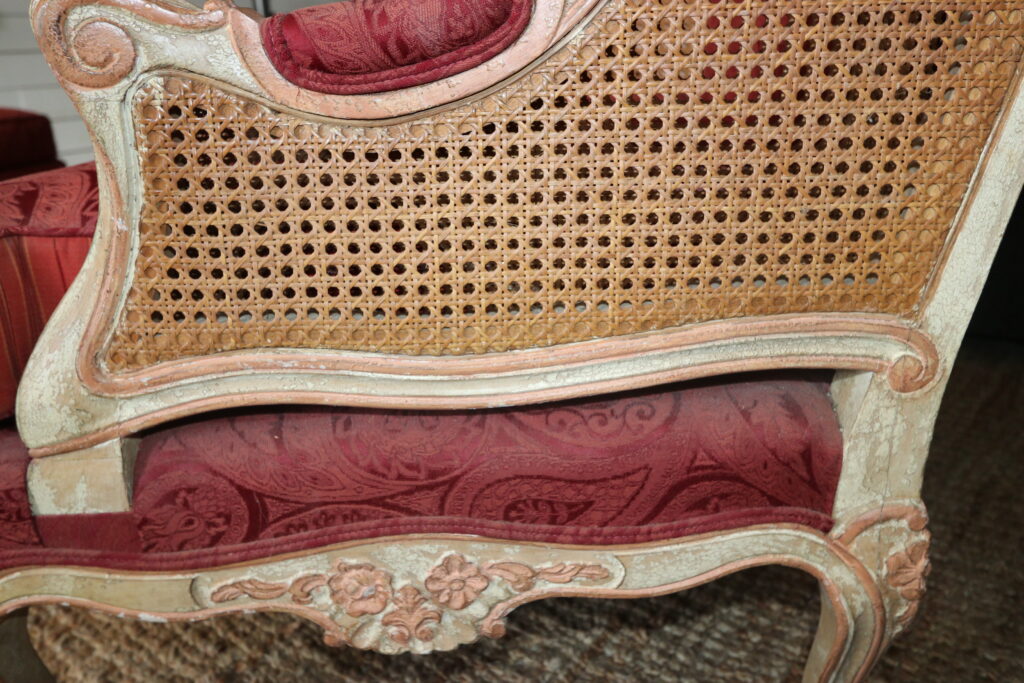
Chairs similar to the one I am reupholstering can sell for thousands on sites like Chairish. I purchased my chair and ottoman for just over $100 so as you can imagine, I am really excited the transformation of this chair!
Step 2…Chose and Order Fabric,Thread, Welt Cord (& batting if needed)
If you plan to reupholster a French chair, choosing the fabric for a project is an important decision and it can really impact the look and the lifespan of a chair.
I highly recommend ordering a variety of samples and colors so you can see and feel the quality and look of the fabric before committing to it.

I envisioned this french chair with a dark stain and deep green velvet from the beginning. I wanted it to feel plush and inviting and to wear well overtime. The chair is so ornate and detailed I knew it needed high quality, lush, fabric and velvet was the right choice for this particular piece.
I used a fabric yardage calculator to figure out how much fabric I’d need for both the chair (with one seat cushion) and the ottoman (with a cushioned topper).
I ordered a few samples of velvet from KOVI Fabrics and ended up choosing a plush velvet upholstery fabric in the color “Hunter Green” # K2117 . It’s a gorgeous deep rich olive/hunter green and it is incredibly soft!
Step 3… Gather all your templates and prep them
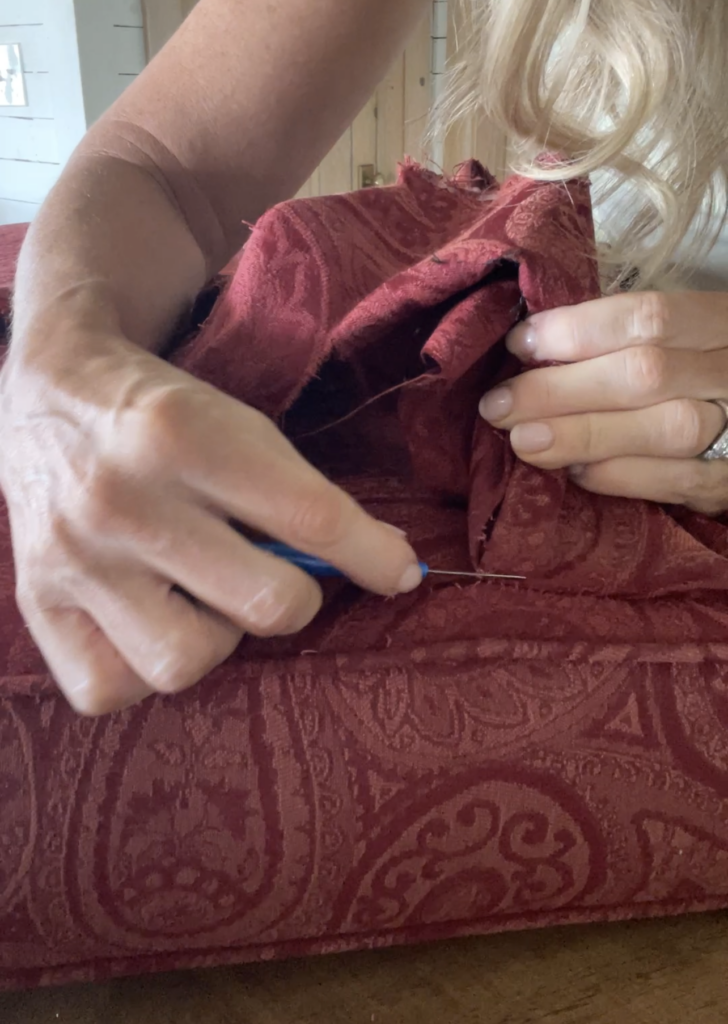
I wanted to use the old cushion fabric on the ottoman and on the chair seat as a pattern so I used a stitch ripper to deconstruct them at all the seams.
I removed the zipper on the ottoman cushion and the chair seat cushion to reuse and also removed all the single welt cording around each cushion (piping).
Step 4… Measure & Cut The Fabric
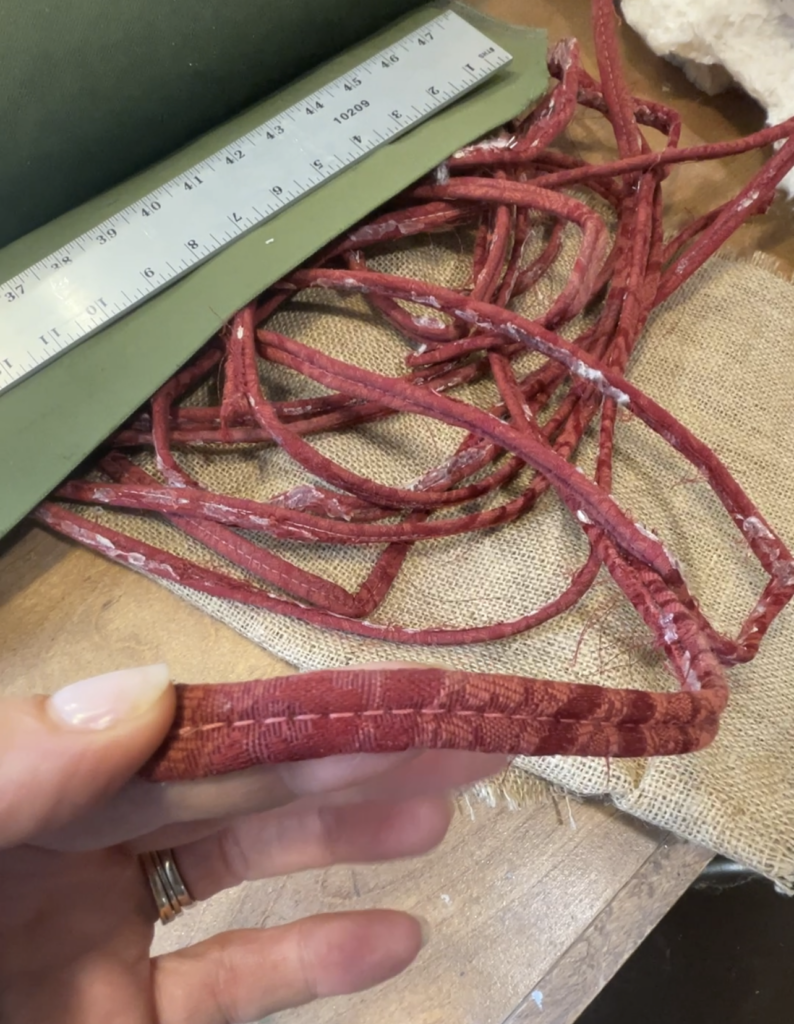
After I had the chair fabric deconstructed and all of the old fabric pieces set aside, I took a measurement of the double welt cord I pulled off. I also took a measurement of all the single welt cord that had been on both the ottoman cushion and the seat cushion of the chair.
I rolled out the gorgeous velvet fabric on my kitchen island with the back of the fabric facing upward. I had to pay close attention to the nap of the velvet as I laid out each template (old fabric pieces) and pined them in place. Once I had my pieces all laid out on the new fabric, I used chalk to trace an outline of each piece.

I cut all the pieces I’d be using to upholster (staple in place) extra large to give me plenty of fabric to pull into place when I was stapling them to the chair.
I cut out each of the fabric pieces I’d be using to create the two cushions with about a 1inch seam allowance.

To start making all my welt cord, I used my self healing cutting mat and a rotary cutter. I rolled out the fabric, folded it over to meet itself at a 45 degree angle and used a 2 inch wide by 4 ft long ruler as a guild to cut out the fabric strips. I made a total of 35 ft of double welt to use for the upholstery and 38 ft of single welt for the cushions.

Step 4… Sewing Welt (Piping) and 2 Cushions
I sewed the strip together on each end (paying close attention to the nap of the velvet) to create a really long continuous strip of fabric.

I used a double welt sewing machine foot to run the double welt and fabric through and also made the single welt needed with the same sewing foot.

Next, I sewed both the chair seat cushion and the ottoman cushion. Each cushion was sort of a box style cushion but with an unusual curve to it. It took a lot of time to pin all the piping to the top and bottom of each cushion before sewing the back sipper panel and 3 other side panels.

Step 5…Upholstery
I started with the bottom seat (under the cushion) portion of the chair. I added the new piece and then filled in the upholstery batting where it had been previously. I started at the front center of the chair, pulling and smoothing the velvet over and around the batting to the front and stapled it in the center.

Then I did the same thing to the back of the chair seat, only stapling it once and then smoothed out each side, and stapled once in each side to hold everything in place. This whole process takes time and attention to detail. The fabric needs to be pulled taught but not stretched (if that makes sense).
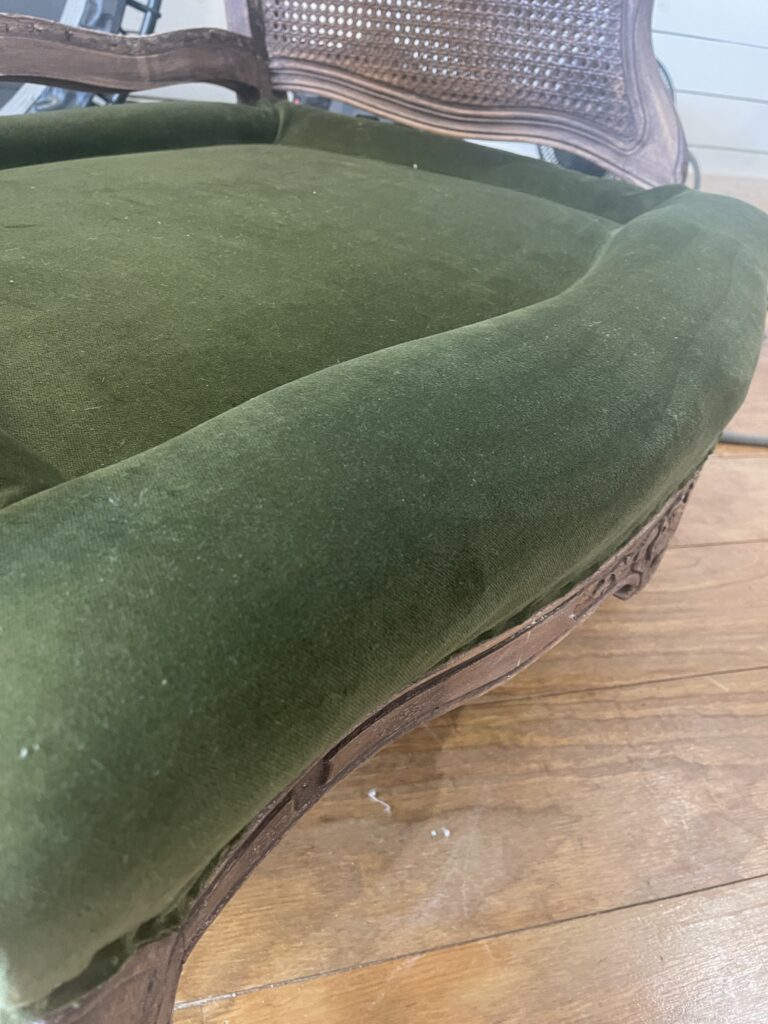
Next I stapled the fabric moving from front center to the left corner (leg) and the same thing starting center moving to the right, stopping just before the corner (leg). I repeated this on the remaning three sides, saving the chair leg (corners) for last.
Then I folded each corner under creating a seam and stapled it in place. I cut away all the excess fabric once the entire seat perimeter was securely stapled in place.

Next I stapled the (open) back panel in place. I wanted to add more structure to the back of the chair since is its an open back with just fabric on the back and front of the seat back. So I added a thick strapping in a basket weave pattern across the back of the chair before adding back the padding and batting in place.

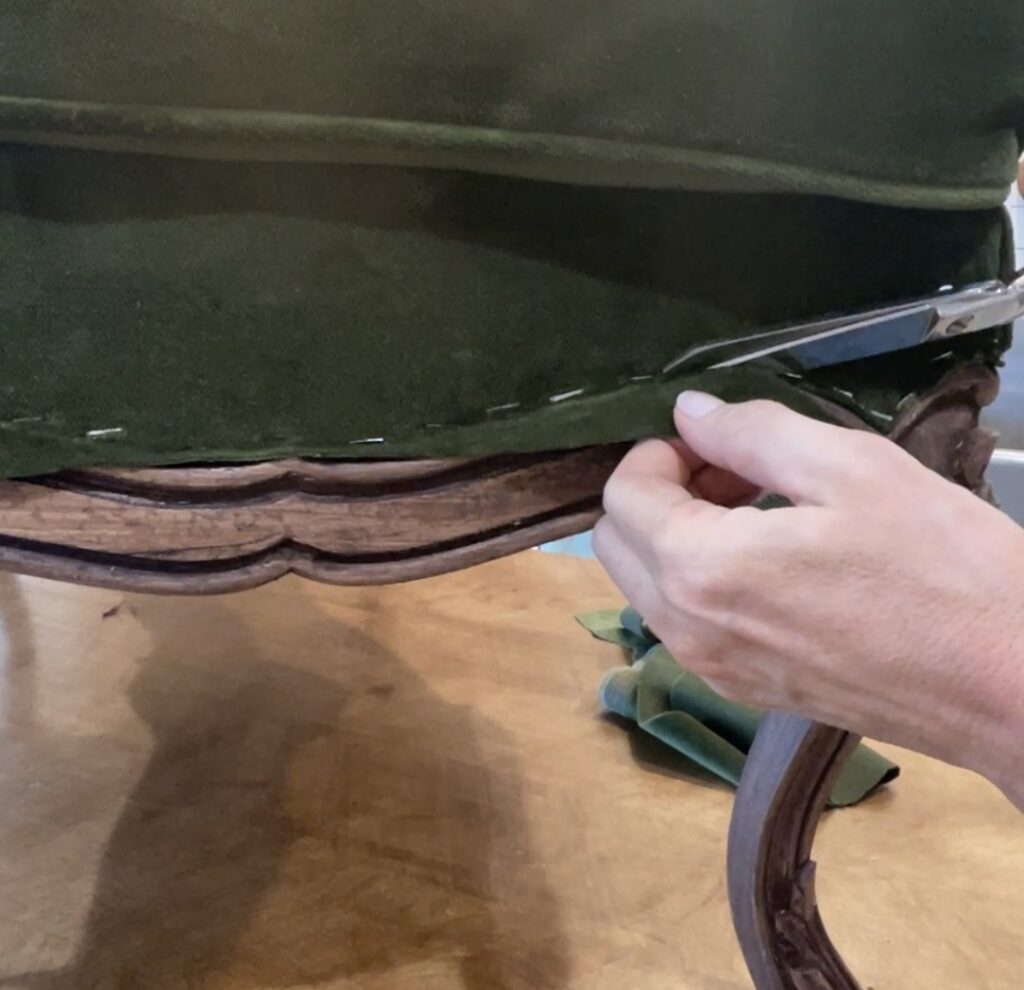
Then I stapled velvet fabric to the front (of the seat back) all the way around the chair back (starting in the center of all four sides and working my way to the corners. Then I cut all the extra fabric right where the staples and the wood meet up.
Step 6…Adding the Finishing Touches (Double Welt Cord)
After all the work I had put into this french chair and ottoman, I was thrilled to finally be ready to apply all the double welt! I have tried a few methods of applying double welt to furniture and I prefer using fabric hot glue to secure it.

I start by trimming back the two welt pieces and leaving about an inch of lose fabric on the ends. Then I hot glue the lose end over on the back side of the double welt so I have a clean edge to start. I never start my welt in the front of a chair, but off to the side or in a back corner.

I apply a very small bead of glue, use my Awl Tool to press down on the seam between the two welt cords and run it across a few times pressing firmly until the glue is set. I like to work in sections of about 4 inches at a time.
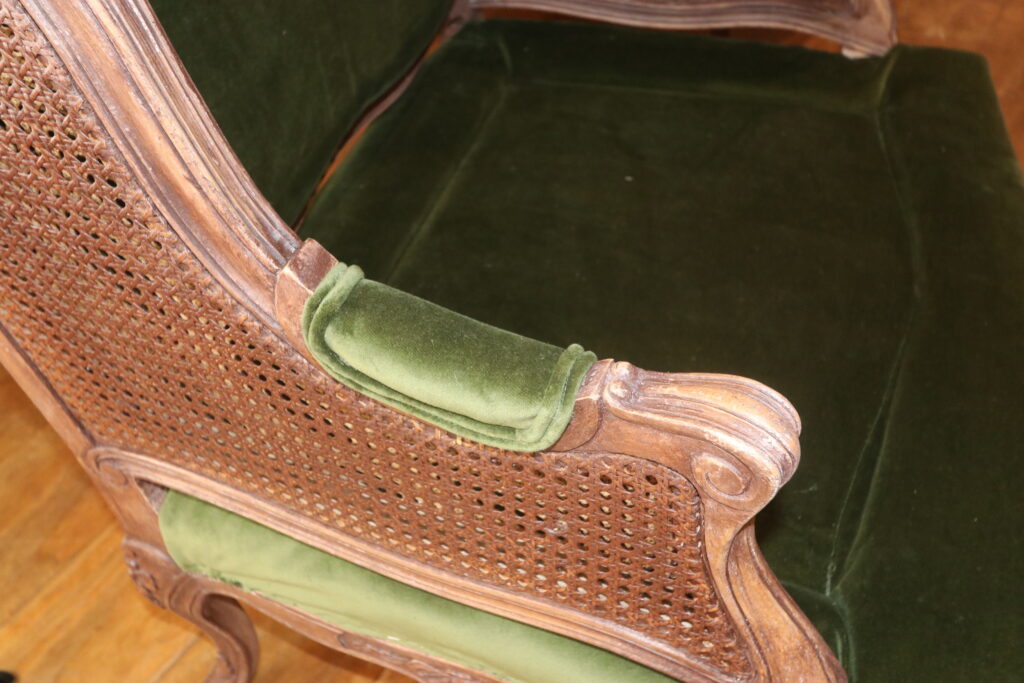
To give you an idea of the depth of the project, I am a beginner and have only upholstered a few pieces of furniture and the entire process of upholstering the chair (with filming) took roughly eight hours (not including the sewing).

Hot glue can get really messy, so I just took my time gluing on the double welt cord. I love using these little finger sleeves to protect myself from potential burns. The heat can still come through a little bit, but I never get burned when I use them. They’re great!

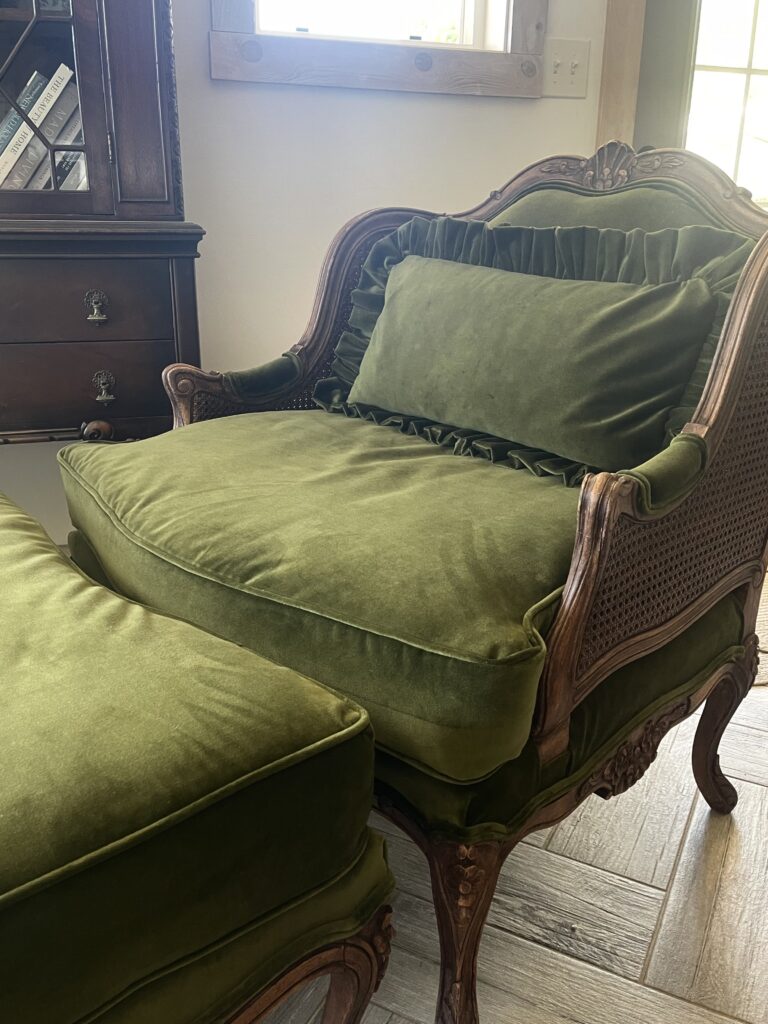
After I moved the chair downstairs to the living room, and uploaded my video to YouTube, I decided the chair needed one more thing. I gathered my small amount of left over fabric, measured the width of the seat back and made a ruffled edge lumbar pillow to give it a little something extra!

I learned so much refinishing this french chair and I am very happy with how it turned out! The velvet with the deep, rich wood tone is just beautiful and I can’t wait to enjoy it for years to come.
Be sure to check out the video to see the entire process unfold, especially if you’re a visual learner like I am! And if you haven’t seen part 1, you can find that post linked here or the video linked here.